
The Sani people are a distinct branch of the Yi ethnic minority living primarily in the central and eastern parts of Yunnan province, China, with a population of roughly 100,000 to 137,000 people.
Self-Name: They call themselves "Ni," which translates to "happy people" in their language.
Geography: Most live in Shilin Yi Autonomous County (formerly Lunan) near the famous Stone Forest, alongside communities in Luxi, Yiliang, Mile, Luliang, and Qiubei counties.
Language: They speak the Sani language, a branch of the Tibeto-Burman language family and a dialect of the Yi language.
The Legend of Ashima: Sani culture centers around the epic folk tale of Ashima, a symbol of freedom, kindness, and beauty. Young Sani women are traditionally referred to as Ashima.
Totems and Beliefs: They hold a deep reverence for nature, tigers (which are placed as stone protective figures above doors), and spiders, combining traditional animist spirit and ancestor worship with localized folk Christianity.
Arts and Dress: Women are renowned for intricate embroidery and colorful, butterfly-like floral headwraps. Traditional music and dance include the lively Da Sanxian (Jumping Music) and courtship communication via leaf-blowing and flutes
Festivals: Major celebrations include the Torch Festival in the 6th lunar month, the Miji Festival, and annual ancestor-worship events.

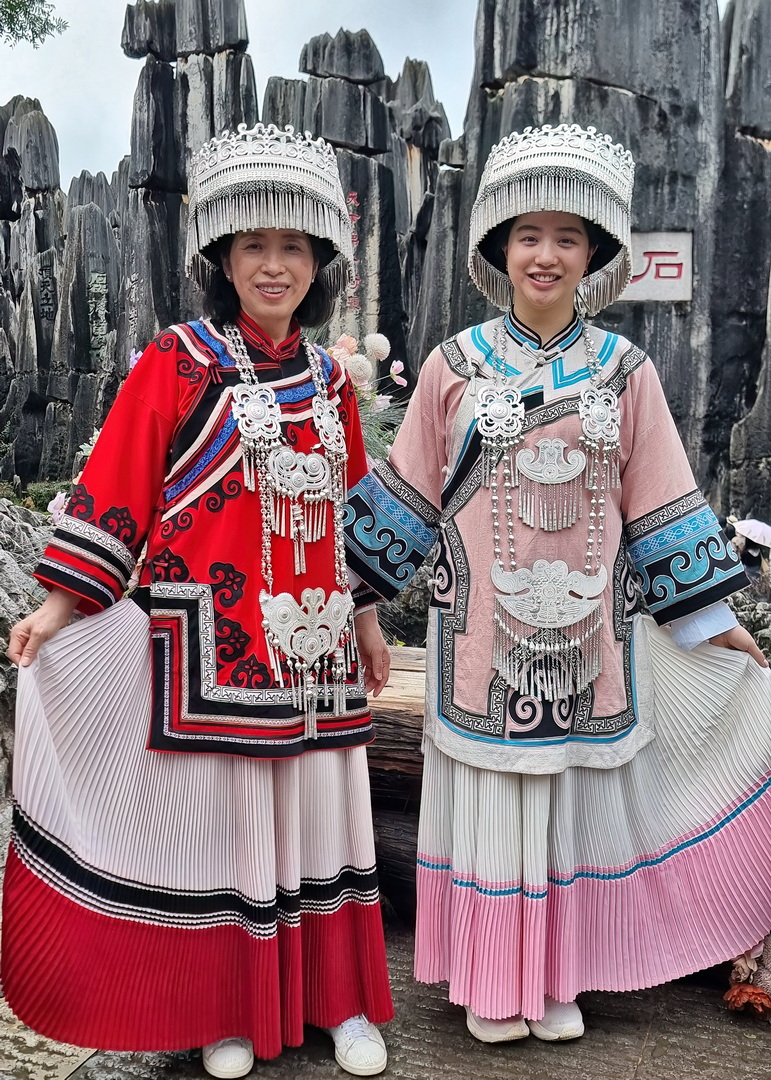
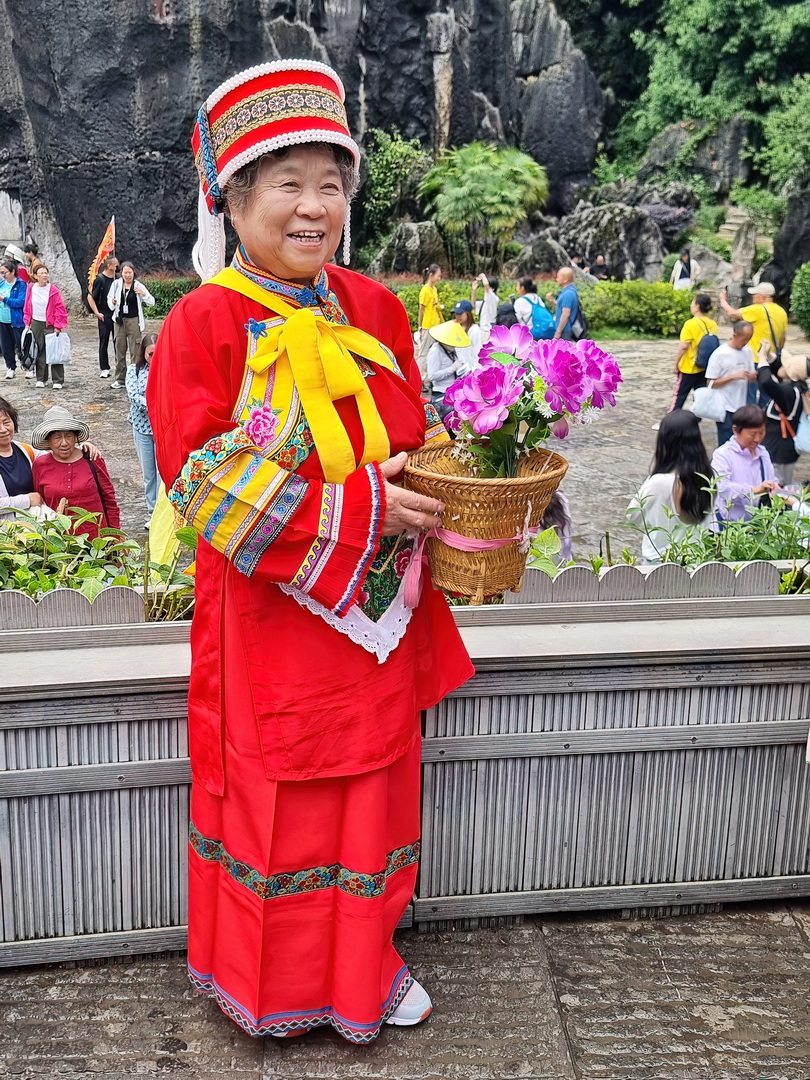
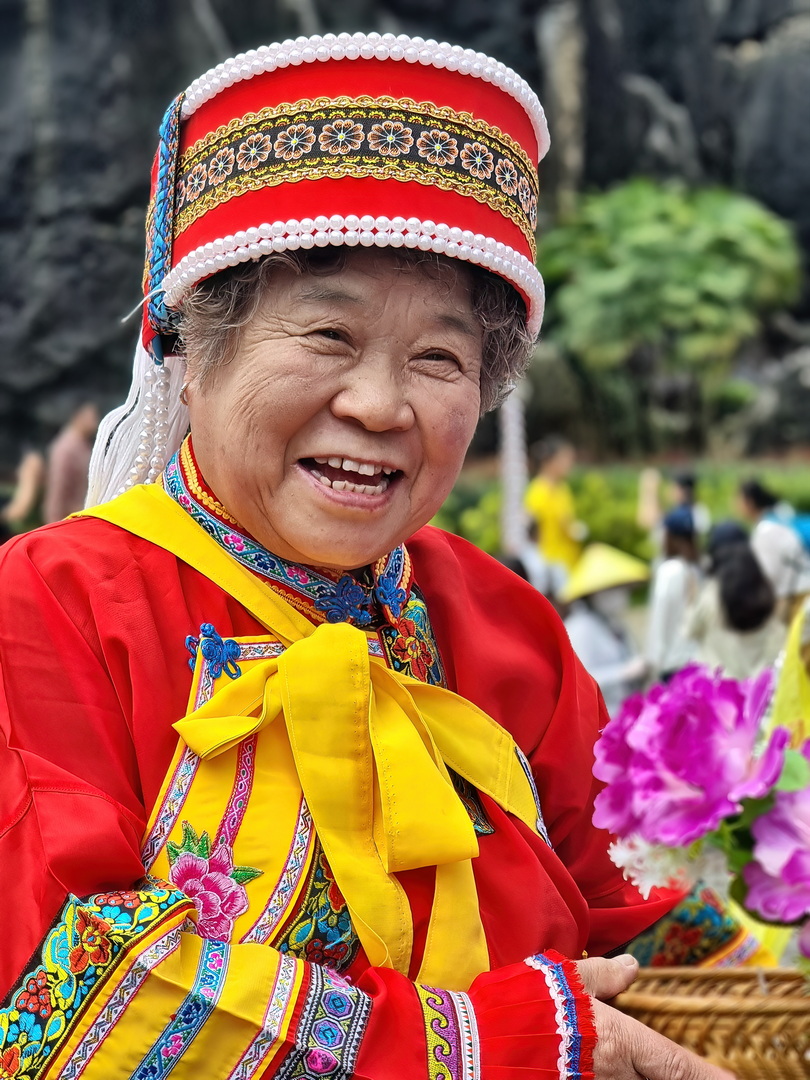
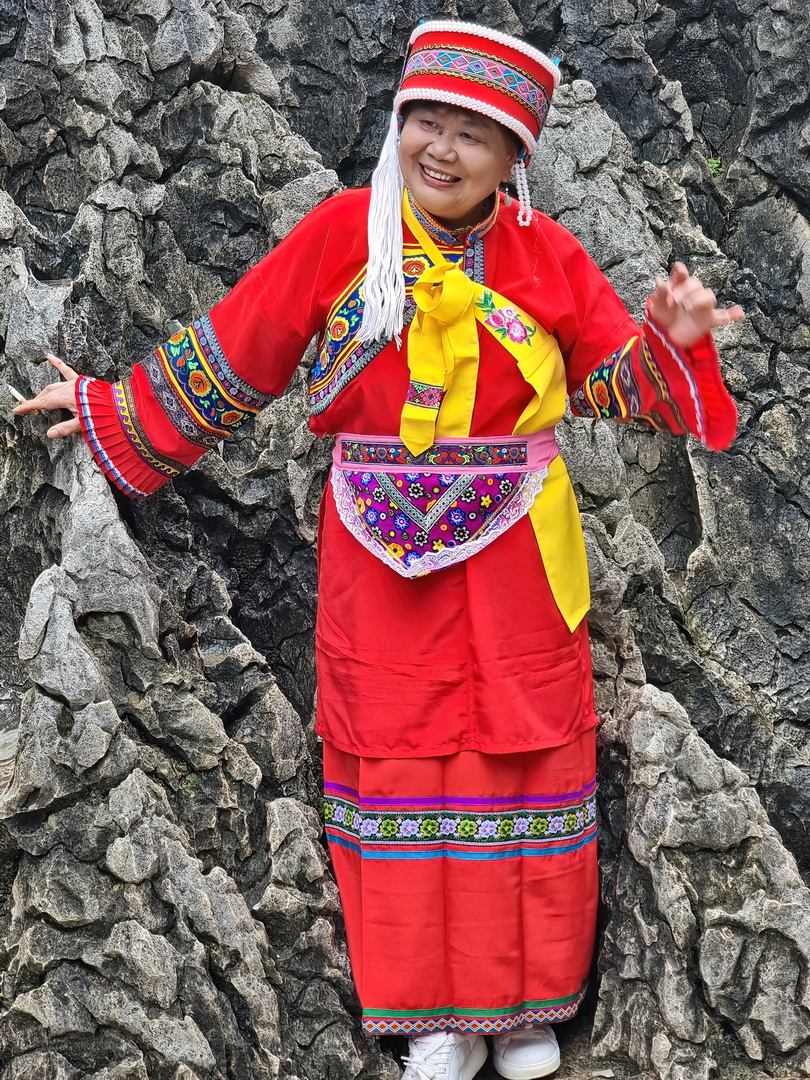
Photo: © Joan Riera Baladas / China - 2026